The Phrase
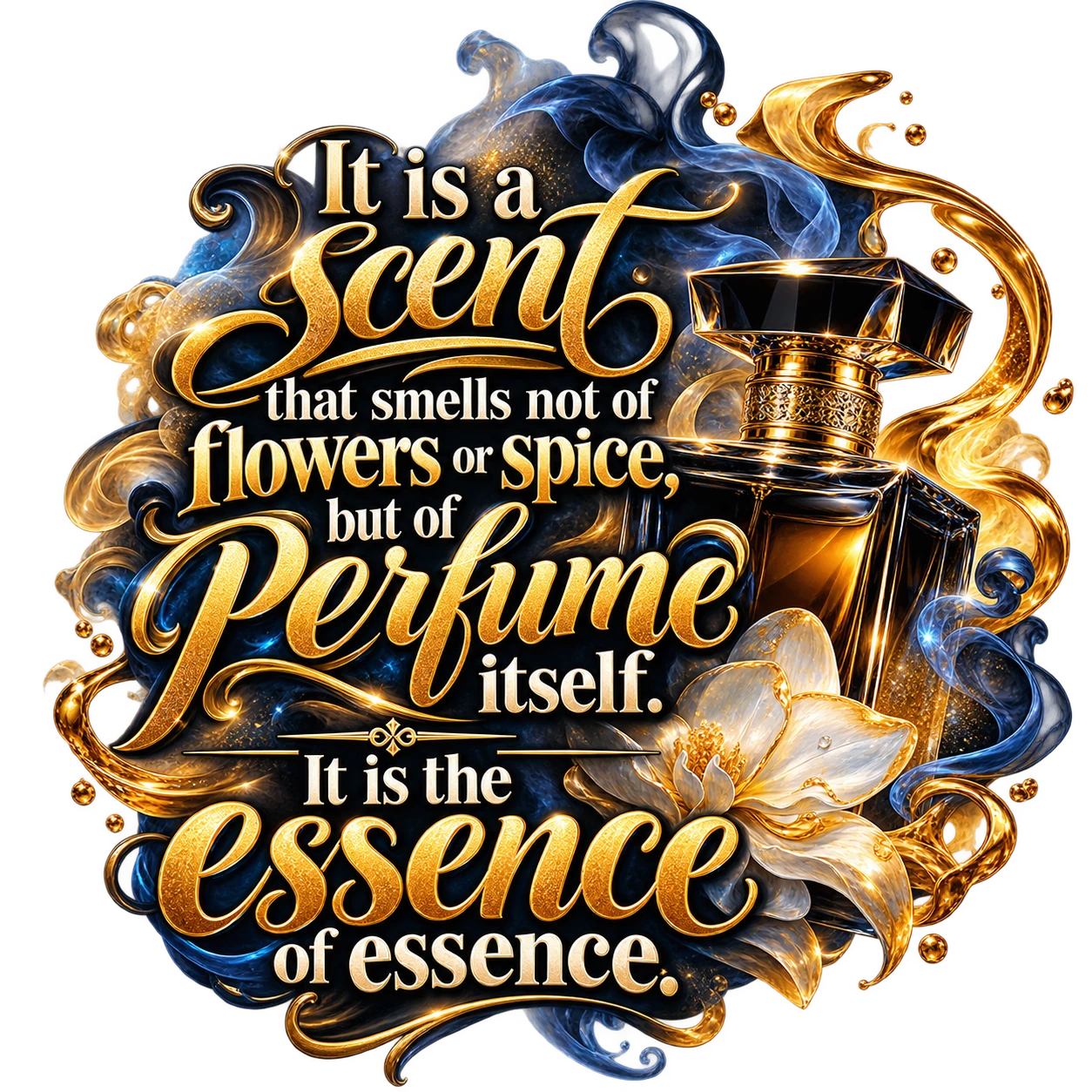
“It is a scent that smells not of flowers or spice, but of perfume itself. It is the essence of essence.”
The fragrance beneath fragrance.
“It is a scent that smells not of flowers or spice, but of perfume itself. It is the essence of essence.”
A hypothetical luxury fragrance whose identity begins not with ingredients, but with an idea: what remains when fragrance is reduced to its most essential meaning.
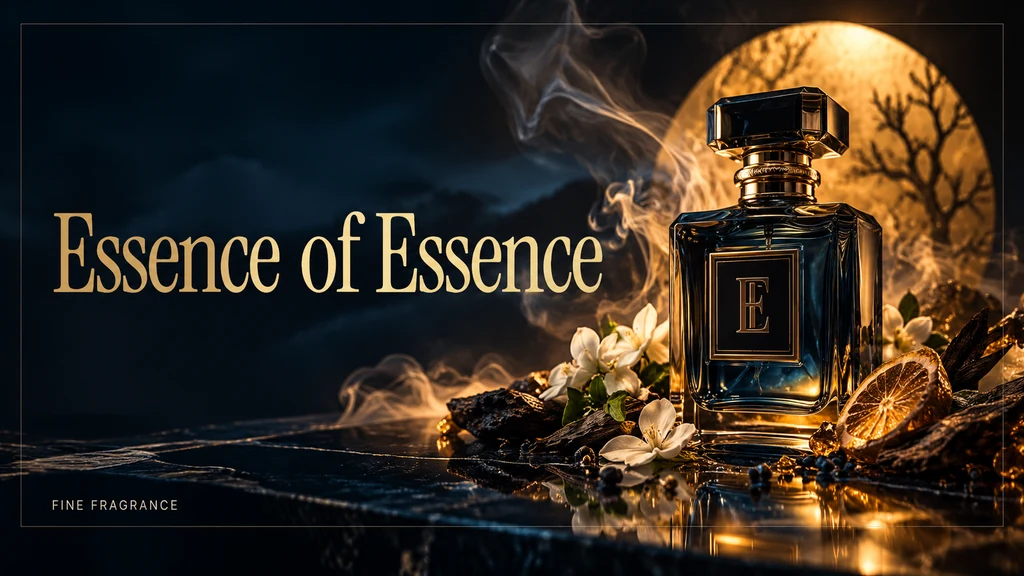
Midnight glass, warm amber, antique gold, ivory, vapor, reflection, and deliberate restraint.
THE VERBAL IDENTITY SYSTEM
“It is a scent that smells not of flowers or spice, but of perfume itself. It is the essence of essence.”
Luxury through reduction. Remove every expected description of fragrance until only the idea of fragrance itself remains.
A fine fragrance positioned less as a list of notes and more as an encounter with scent itself.
Midnight glass, warm amber, antique gold, ivory, vapor, reflection, and deliberate restraint.
Language that withholds the obvious and invites the customer to imagine what “perfume itself” could smell like.
THE CAMPAIGN WORLD
The anchor phrase establishes the territory. The supporting language proves that the idea can sustain a complete brand voice without losing its center.
The fragrance beneath fragrance.
Before the flower. Before the spice. There is scent.
Wear what remains.
Essence, without explanation.
EXPRESSIONS
The identity reduced to its purest hierarchy: house, name, concentration.
A campaign line built to create curiosity rather than explain ingredients.
A tactile retail encounter that makes abstraction feel immediate.
A visual vocabulary derived from the meaning of the phrase.
A single original thought can become a name, a packaging hierarchy, a campaign vocabulary, a retail experience, and a recognizable brand world.
Most branding begins with what a brand should look like.